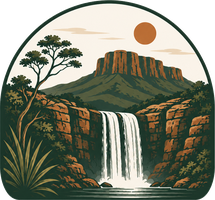

Foto: Sabrina Machado / Visit Veadeiros · © direitos reservados · visitveadeiros.com.br
More photos on GoogleComplexo Rio Caldeira — Cachoeira do Caracol
A private waterfall complex on the Rio Caldeira, ~19 km from Alto Paraíso via the GO-239 toward the village of Sertão, with four falls in a row: Caracol, Pedrão, and Walkyrias 1 and 2, all with swimming pools. The Cachoeira do Caracol, the last and tallest on the route, falls through a fissure in the rock forming a veil in front of a spiral wall — the final access is by via ferrata (a metal ladder fixed to the rock) with a harness and helmet provided, in groups of up to 6 visitors plus the guide; under-10s can't go up. The visit requires booking and an accredited guide — it's forbidden to enter the complex without a guide. An easy ~2.5 km (round-trip) trail along the river, with shaded forest stretches.
- Official complex rule: no entry without an accredited guide/leader. Booking required via WhatsApp (61) 99965-8738 (Kátia) or Instagram @complexoriocaldeira; wristbands/tickets picked up in advance (sold Mon–Sat at the Fluorita Boutique shop, Hotel Tapindaré, in Alto Paraíso). Entry R$ 100 (residents R$ 40; under-6 free, 7–13 half price) — price confirmed by the owner in Aug 2026. The via ferrata equipment (harness and helmet) is provided on site and is mandatory. Caracol: groups of up to 6 visitors plus the guide; under-10s don't go up.
- 9am to 4pm; 2024–26 sources differ between daily operation and Thursday to Tuesday (closed Wednesdays, per Curtamais Mar 2026) — confirm when booking.
- In the rainy season the complex may close and reopen unpredictably and access may change — confirm availability before you go.
- CAT Alto Paraíso — (62) 3446-1159 · diariamente 8h–12h / 13h–17h
- Servitur (associação de guias de ecoturismo) — WhatsApp (62) 99678-5160 · @servitur_ecoturismo
How to get there
- From Alto Paraíso19 km
GO-239 toward the village of Sertão, most of it by dirt road (~19–20 km total). Entry and exit only through the complex gate. Sources differ on the dirt mileage — confirm conditions when booking, especially in the rainy season.
Approximate pin — confirm access with a local guide before driving out there.
The trail
An easy trail (~1.6 km from the parking area to the first fall), largely shaded with ropes on the stretches that need care; the full route past all 4 falls is ~4 km (Wikiloc). The final stretch to the Cachoeira do Caracol is by via ferrata — hard, not recommended for anyone afraid of heights.
The water & the river
- River
- Rio Caldeira
Ratings
Scored 1 to 5. Beauty is subjective — so we split it into axes, letting you sort by what matters to you.
Planning your visit
Complexo Rio Caldeira — Cachoeira do Caracol is about 19 km by road from Alto Paraíso; access is by a well-kept dirt road; the trail is 2.5 km round trip, easy level.
The visit requires a local guide: official complex rule: no entry without an accredited guide/leader. Booking required via WhatsApp (61) 99965-8738 (Kátia) or Instagram @complexoriocaldeira; wristbands/tickets picked up in advance (sold Mon–Sat at the Fluorita Boutique shop, Hotel Tapindaré, in Alto Paraíso). Entry R$ 100 (residents R$ 40; under-6 free, 7–13 half price) — price confirmed by the owner in Aug 2026. The via ferrata equipment (harness and helmet) is provided on site and is mandatory. Caracol: groups of up to 6 visitors plus the guide; under-10s don't go up; entry costs R$ 100 per person.
- Do I need a guide?
- Official complex rule: no entry without an accredited guide/leader. Booking required via WhatsApp (61) 99965-8738 (Kátia) or Instagram @complexoriocaldeira; wristbands/tickets picked up in advance (sold Mon–Sat at the Fluorita Boutique shop, Hotel Tapindaré, in Alto Paraíso). Entry R$ 100 (residents R$ 40; under-6 free, 7–13 half price) — price confirmed by the owner in Aug 2026. The via ferrata equipment (harness and helmet) is provided on site and is mandatory. Caracol: groups of up to 6 visitors plus the guide; under-10s don't go up.
- How much is entry?
- R$ 100 per person.
- Can I go in a regular car?
- Yes, with care — well-kept dirt road.
- When to go?
- In the rainy season the complex may close and reopen unpredictably and access may change — confirm availability before you go.
- What are the hours?
- 9am to 4pm; 2024–26 sources differ between daily operation and Thursday to Tuesday (closed Wednesdays, per Curtamais Mar 2026) — confirm when booking.
Guides for this waterfall
This visit requires an authorised guide. Message them directly — the text is ready to send.
See all guidesApproximate position — the exact pin is still being checked with people who know the trail.
How did this waterfall form?
- 1
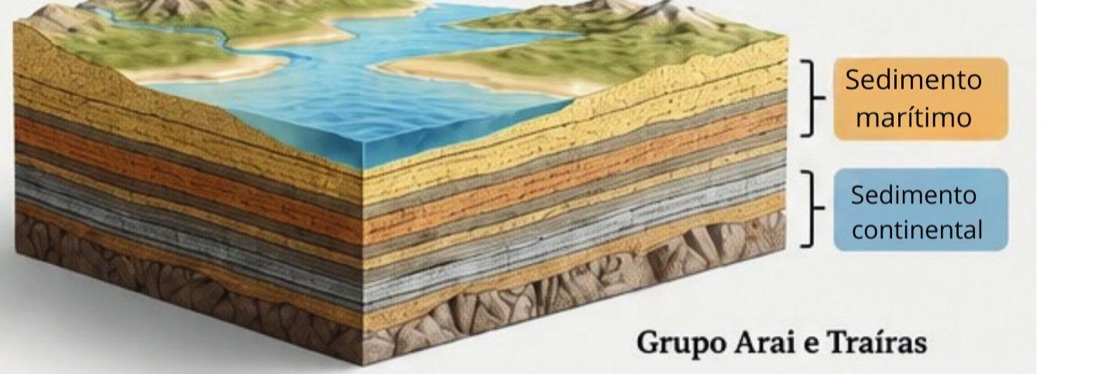
Sedimentary basins form (Araí and Traíras groups)
- About 1.8 billion years ago, a rift began to open.
- That environment filled with continental and later marine sediments.
- Over time these sediments piled up and turned to rock, forming layers.
- 2
The Earth moves
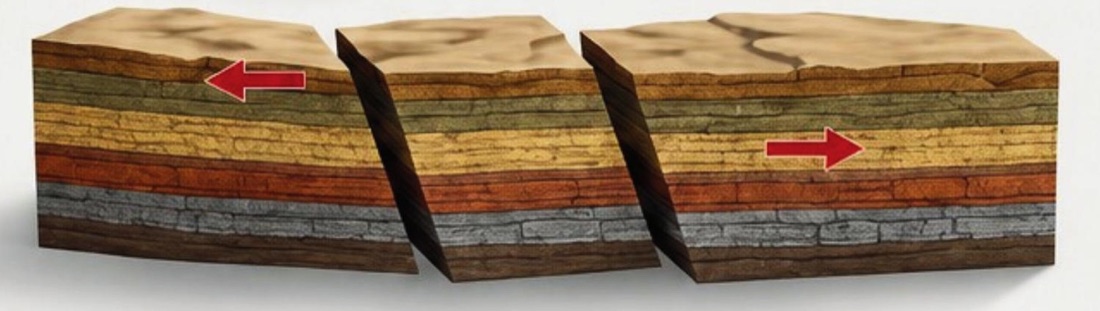
- The region underwent strike-slip tectonics.
- The process deformed and broke the layers.
- The rocks were transformed, becoming more resistant.
- 3
A new sedimentary basin (Paranoá Group)
- About 1.0 billion years ago a new basin formed, this time marine.
- New layers were deposited over the older ones.
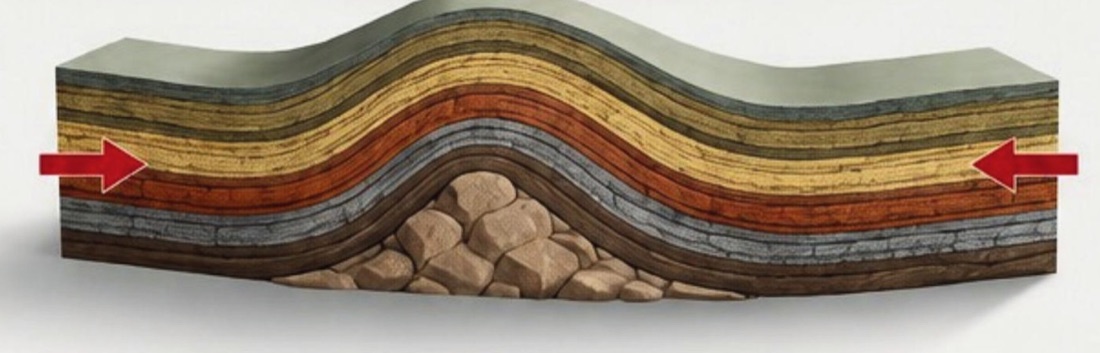
- Later, these rocks were compressed from south to north, pushing against the older layers.
- 4
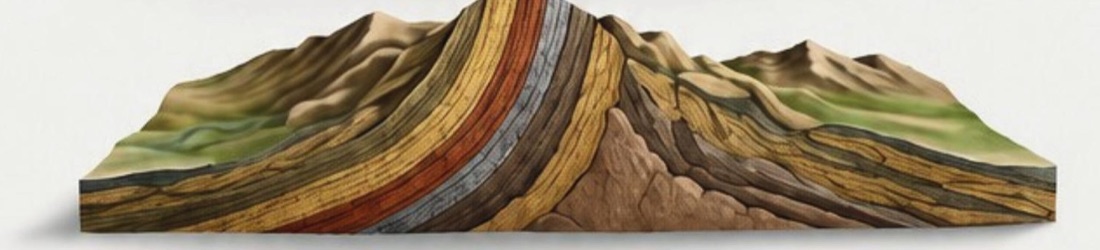
Folding and uplift
- The push made the rocks fold.
- The layers were uplifted.
- The landscape we see today began to take shape.
- 5
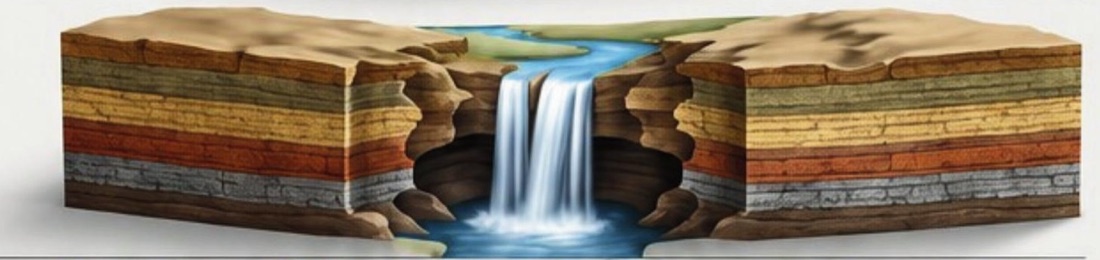
The work of water
- In time, a river formed here.
- The water began to carve the rock.
- One weaker layer eroded more easily than the rest.
- 6
The waterfall today (Caldeira Complex)
- The water carved out that weaker layer.
- It opened a space inside the rock.
- Today the waterfall runs through that very layer — a unique, special landscape.
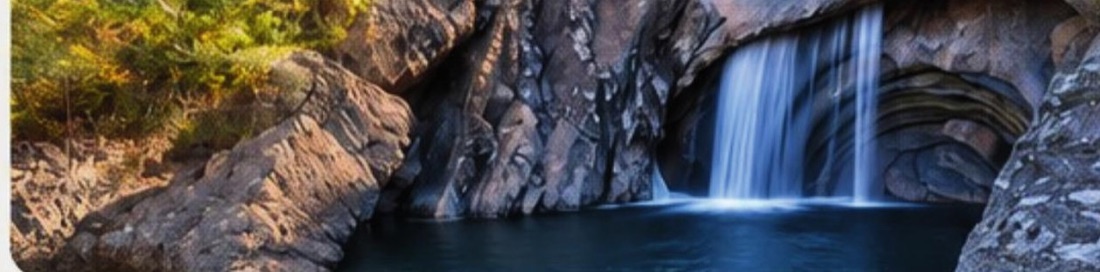
Geological history, the Earth's movements and the steady work of water combined to create the waterfall you see today.
Enjoy mindfully · Don't remove rocks or plants · Don't retrace inscriptions · Respect nature
Nearby
Other attractions close by, as the crow flies — good candidates for the same day.


FPV video coming soon
Drone footage of this waterfall.
Avaliações
Carregando…